Create a MySQL database in cPanel with the Database Wizard

Databases

0 people found this article helpful

The Database Wizard in cPanel creates a MySQL database, a database user and the user's access in one go. It takes four short steps.

Good to know: if you install WordPress with WordPress Management, the database is created for you. You only need the wizard for other software, or when a developer asks you for a database.

Create the database, the user and the access

  1. Open cPanel from the client area: open your hosting service and click Log in to control panel (see Log in to cPanel from the client area).

  2. In the Databases section, click Database Wizard.
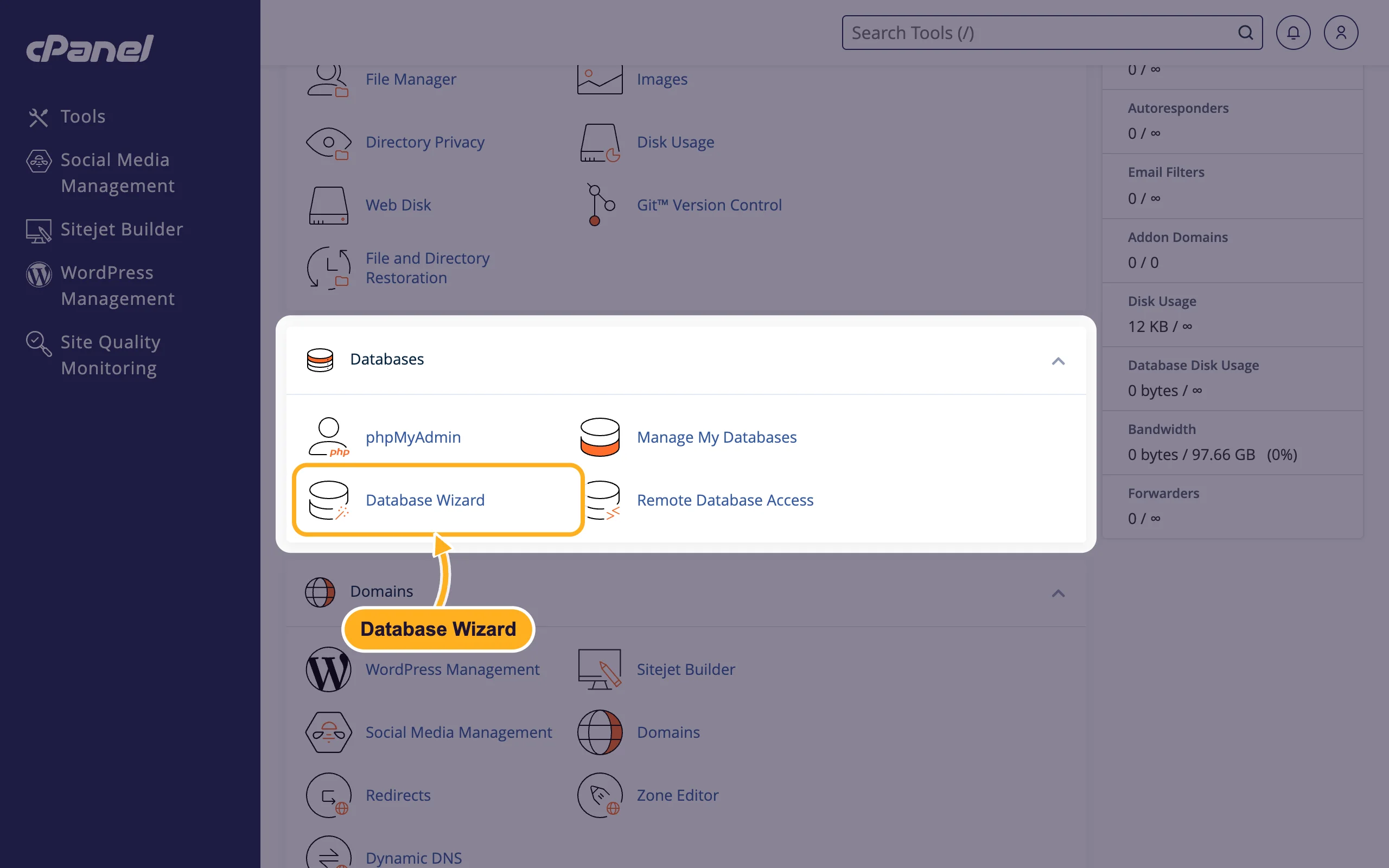
    cPanel Tools page with the Databases section and the Database Wizard icon
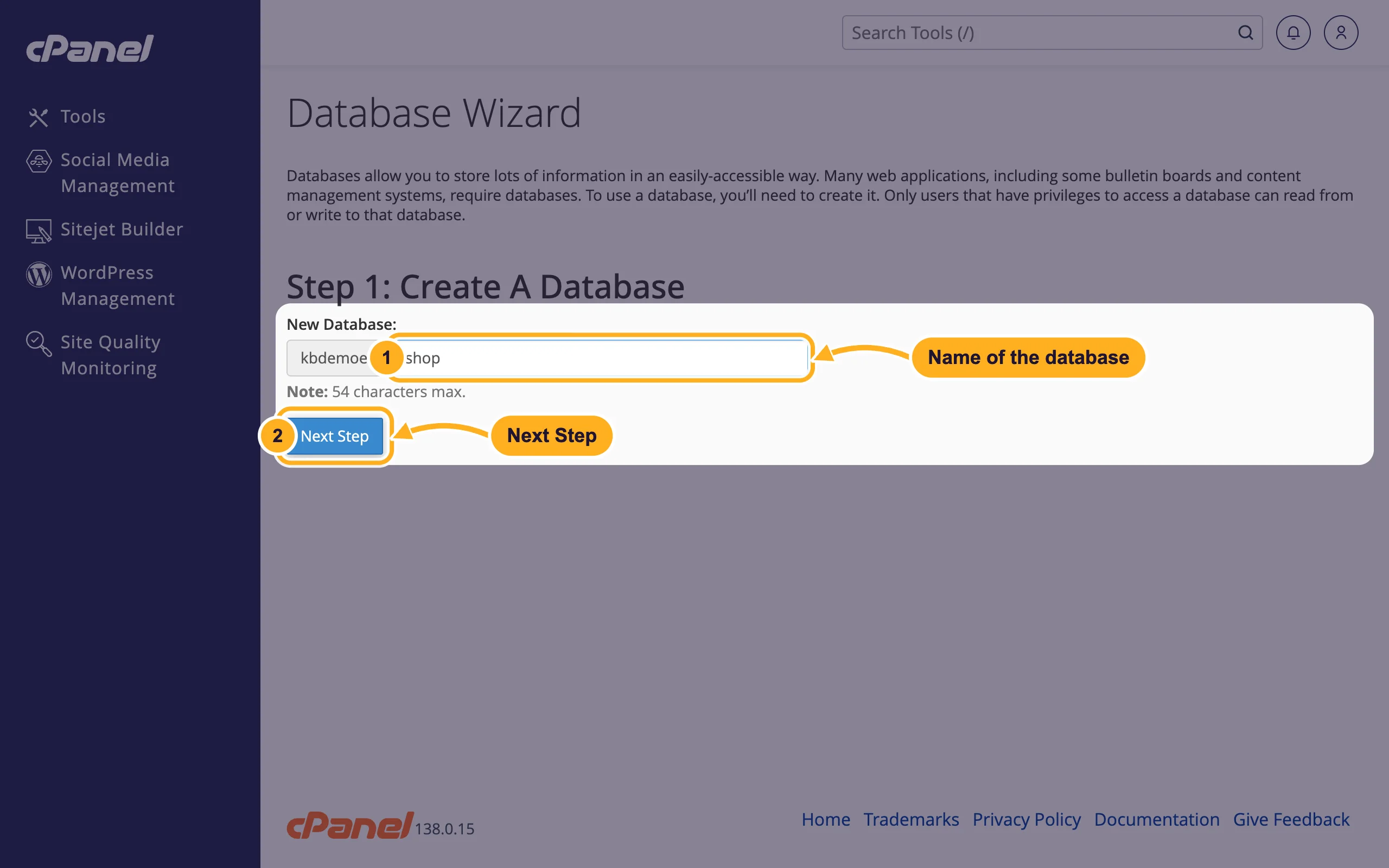
  3. Step 1: Create A Database:

    1. Type a short name in New Database, for example shop. cPanel puts your account name and an underscore in front of it, so the full name becomes something like youraccount_shop.
    2. Click Next Step.
    Database Wizard step 1 with the New Database field and the Next Step button
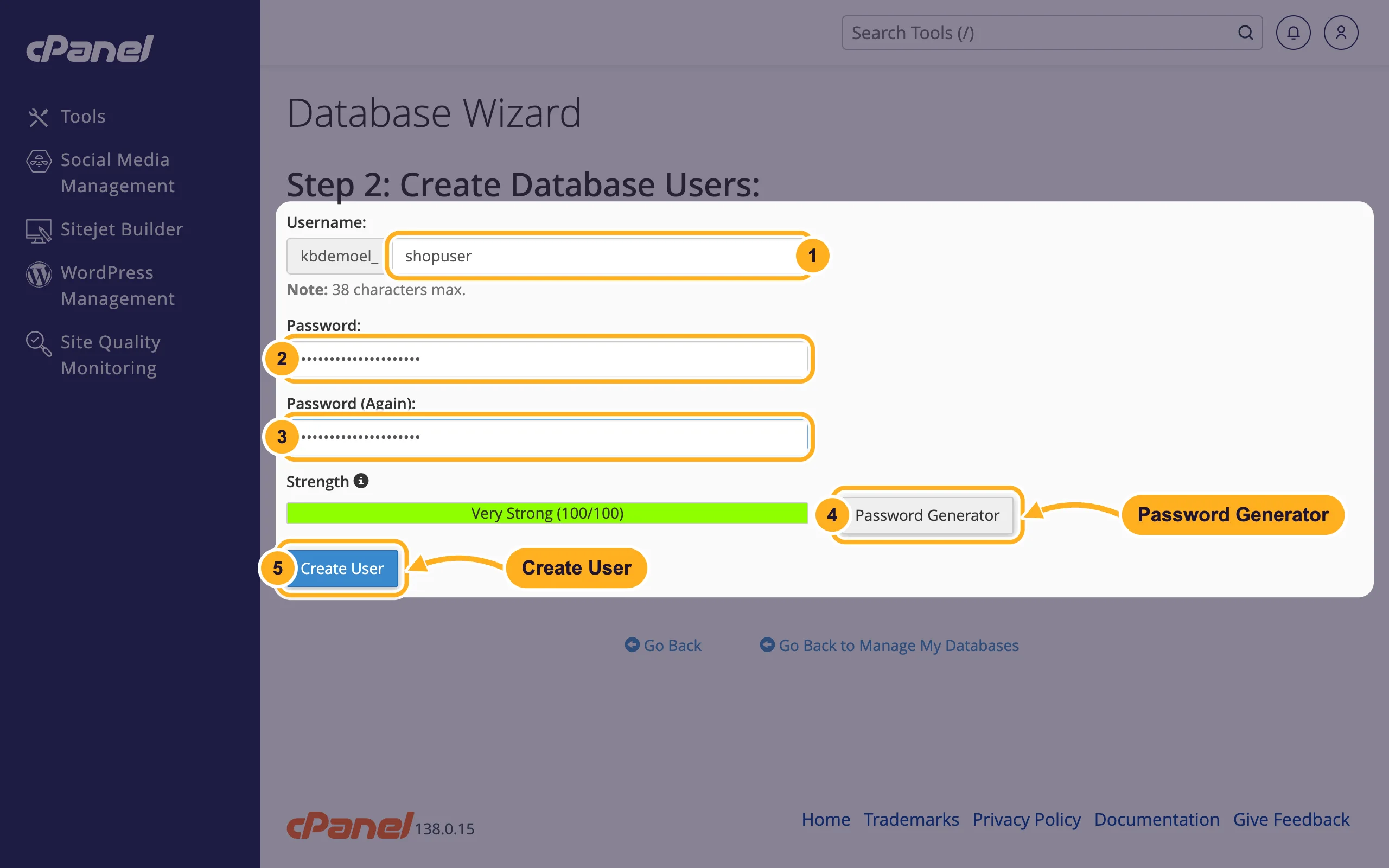
  4. Step 2: Create Database Users:

    1. Username: a short name, for example shopuser. The same prefix is added in front.
    2. Password: a long, unique password.
    3. Password (Again): the same password once more.
    4. Or click Password Generator to let cPanel create a strong password. Copy it somewhere safe before you continue.
    5. Click Create User.
    Database Wizard step 2 with Username, Password, Password (Again), the strength meter, Password Generator and Create User
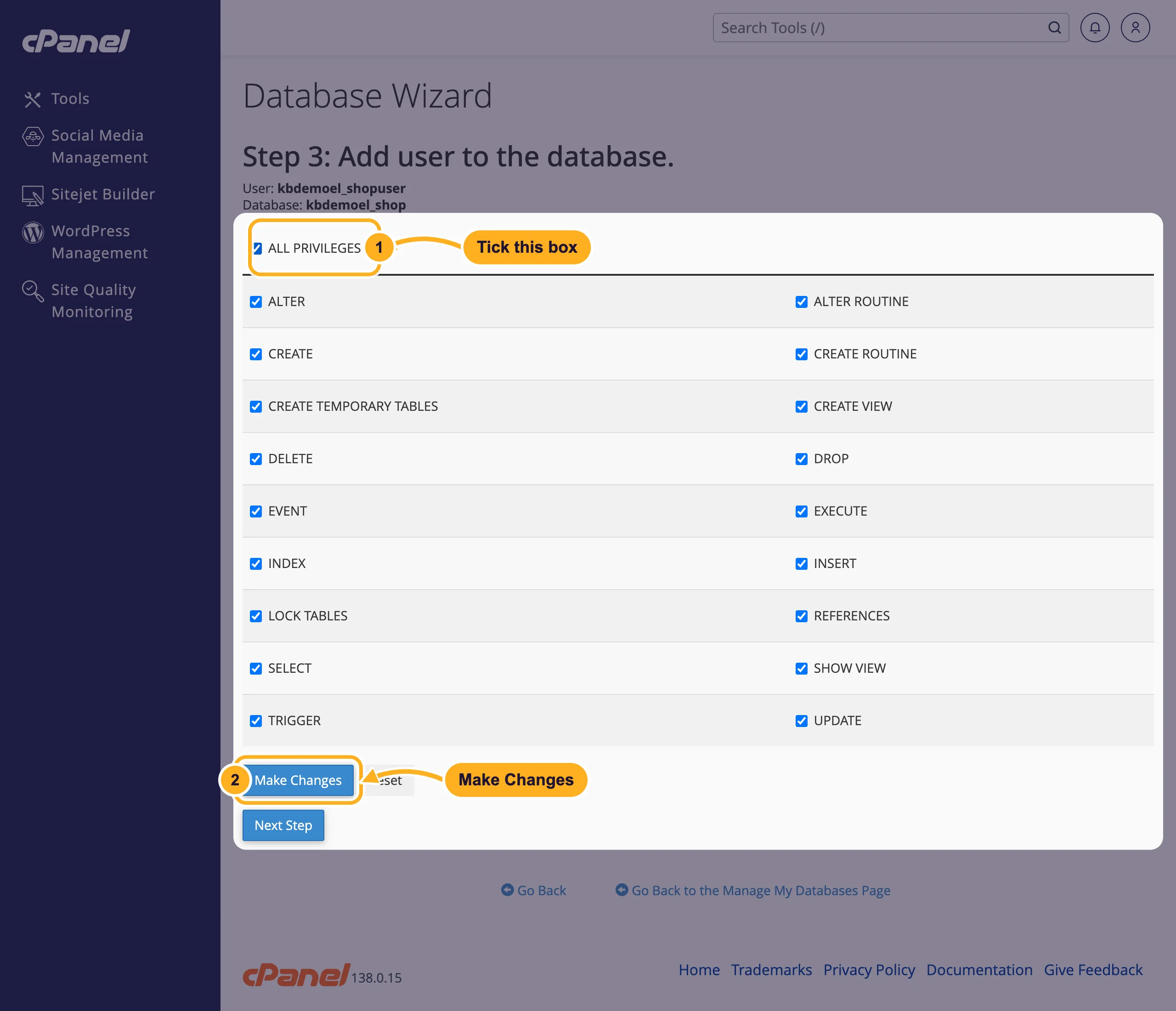
  5. Step 3: Add user to the database:

    1. Tick ALL PRIVILEGES. All boxes below are ticked with it. Most applications, WordPress included, need all of them.
    2. Click Make Changes.
    Database Wizard step 3 with ALL PRIVILEGES ticked and the Make Changes button
  6. Step 4: Complete the Task confirms that the user was added to the database. From here you can add another database or user, or go back to Manage My Databases.
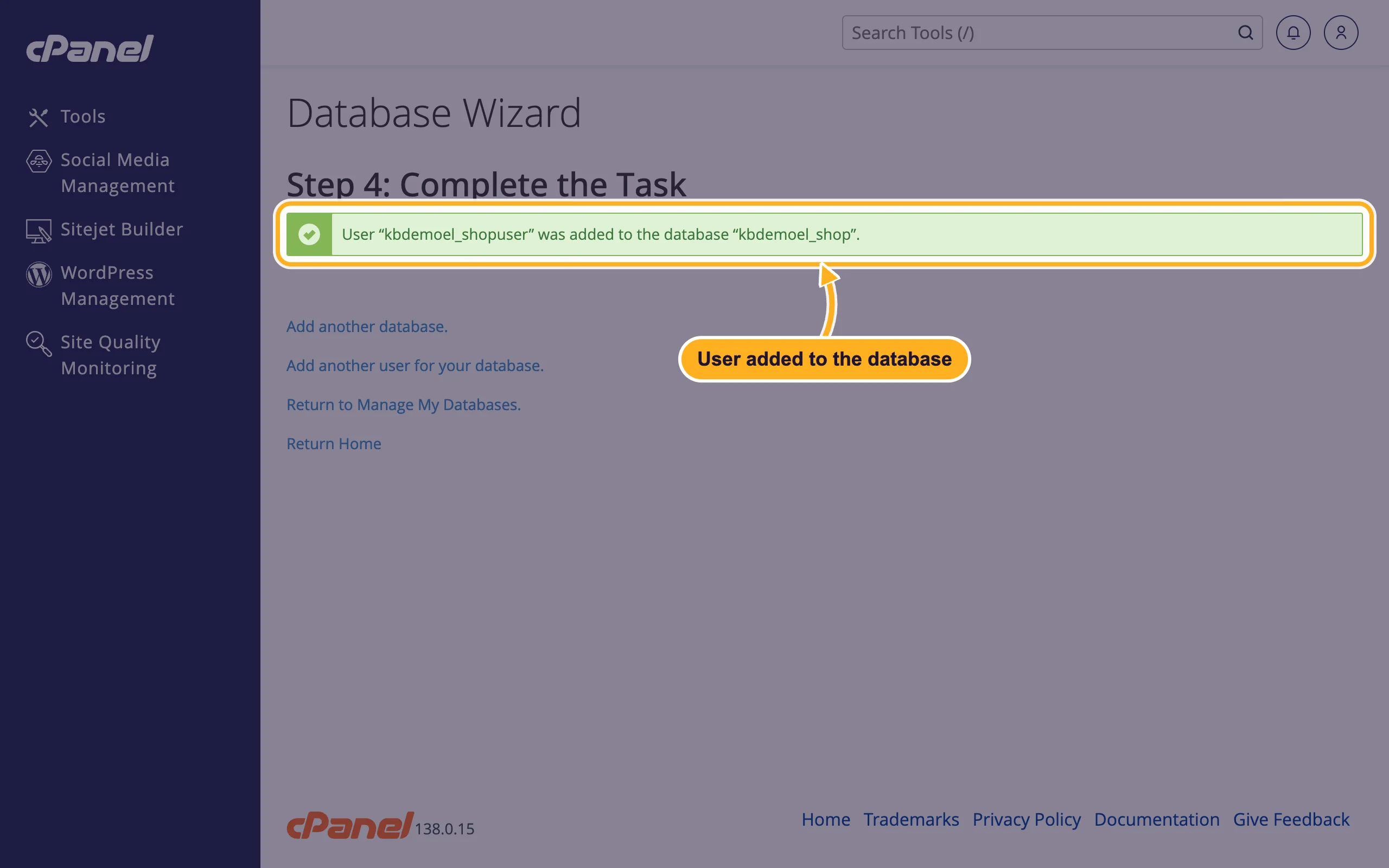
    Database Wizard step 4 with the message that the user was added to the database

The details your website needs

Your application (WordPress, a shop, a script) asks for four things when you install it or in its configuration file:

SettingWhat to enter
Database nameThe full name with the prefix, for example youraccount_shop
Database userThe full user name with the prefix, for example youraccount_shopuser
PasswordThe password you set in step 2
Database hostlocalhost

You'll find the full names later under Databases > Manage My Databases, in Current Databases and Current Users.

Create a database without the wizard

You can also do each part on its own in Manage My Databases: type a name under Create New Database and click Create Database, then create a user and add the user to the database. The result is the same.

Common problems

"The database already exists"

Each name can exist only once in your account. Pick another name, or use the existing database (you'll see it under Current Databases in Manage My Databases).

You can't create another database

Every hosting plan has a maximum number of databases. cPanel shows how many you use in the statistics on the right of its start page, for example "Databases 1 / 5". Delete a database you no longer need (see Delete a database or a database user) or upgrade your plan.

"Error establishing a database connection" on your website

The name, user or password in your application's settings doesn't match, or the user hasn't been added to the database. Check the full names with the prefix, check that the user is listed next to the database under Privileged Users, and set a new password if you're not sure (see Change a database user's password).

Related articles

Still stuck? Open a support ticket and we'll help.


Was this answer helpful?

2FA 301 redirect 3D Secure 404 page 500 error 550 error A record accept quote access log account credit account details account password Account Preferences account security add funds addon domain address importer affiliate program AI assistant AlmaLinux 9 Android email Apache Apache virtual host API token Apple Mail Ask AI auth code authenticator app auto-renew automatic payment automatic updates autoresponder AutoSSL bandwidth billing address billing contact billing section block editor block IP bounce bounce message BoxTrapper build a WordPress website bulk email accounts business email buy domain buy hosting buy SSL certificate CalDAV calendar sync callback can't log in cancel hosting cancellation card declined CardDAV catch-all Certbot change domain WordPress change email change nameserver change package change password change payment checklist checkout choose a plan client accounts client area clone WordPress cloud server coming soon page commission company name confirmation link contact contact form Contact Information contacts control panel cPanel cPanel API cPanel contact email cPanel DNS cPanel domains cPanel email cPanel install cPanel language cPanel layout cPanel login cPanel password cPanel SSL cPanel update cPanel users create cPanel account create mailbox credit card cron cron job CRT key CA bundle CSF firewall CSV import currency custom error page Custom Nameservers custom offer dashboard data center database password database privileges database user Database Wizard date.timezone DDNS deceptive site ahead default address delete database delete old emails deny access deploy deposit device email settings Directory Privacy disk space disk usage DKIM DMARC DNS cache DNS explained DNS Records DNS Zone Management document root domain alias domain grace period Domain Hosting Domain Management domain name domain renewal domain transfer downgrade download invoice due date dynamic DNS ElySpace email account email account exists email backup email client email delivery email disk usage email filters email forwarder email history email hosting email login email migration email password email ports email preferences email quota email routing email signature email test email verification EPP code error error log error pages EV SSL expired domain expiry expiry date export database export emails fake email faster support feedback File Manager file permissions firewall first website flush DNS folder force HTTPS forgot password form email not received forward email free migration free SSL FTP account's password FTP password Galaxy email setup getting started Git GitHub Gmail Gmail app GoDaddy good ticket Google malware warning Google sign-in Google Workspace GST number Gzip compression hacked website hacked WordPress hardening help help center home server hosting hosting addons hosting glossary hosting location hosting plan Hosting Service hosting terms hosting tools hosting types hostname hostname SSL hostnamectl hotlink protection HOW TO ADD NAME SERVERS TO MY DOMAIN NAME How to create additional FTP accounts in cPanel How to create FTP accounts in cPanel How to setup name-servers for a domain htaccess htaccess redirect HTTP to HTTPS image theft IMAP IMAP settings IMAP SMTP settings import emails import SQL Imunify360 index.php virus INR install plugin install SSL certificate install WordPress instant answers invite user invoice invoice details invoice emails invoice PDF invoices IP address IP Blocker iPad iPhone email knowledgebase language large database leech protection LEMP Let's Encrypt LFD linked accounts LiteSpeed Cache live chat locked out log out login login email login problem lost email Mac Mac email mail rules mailbox mailbox check mailbox full mailbox size mailing list Mailman maintenance maintenance mode malware removal malware scan manage services mass payment max_execution_time members area memory_limit menu migrate WordPress migration request migration ticket mobile webmail money-back guarantee move email move website move WordPress site MultiPHP INI Editor MultiPHP Manager multiple accounts multiple websites MX record MX records my domains MySQL MySQL database MySQL user mysqldump nameserver Nameservers network drive new account new order newsletter Nginx Node.js notifications npm nvm open ticket Optimize Website or delete order order email out of office outage Outlook Outlook app Outlook IMAP Outlook mobile Outlook password prompt OX App Suite OX webmail page speed password protect pay all pay invoice payment payment details payment failed payment method payment methods PayPal permalinks permissions phishing phone support PHP errors PHP timezone PHP version PHP-FPM php.ini PHPMailer phpMyAdmin plugin updates point domain print invoice printer SMTP product addons products professional email profile public_html publish a post quick start quota quote quotes rating Raw Access raw access logs reading settings redemption period redirect referral link refund register register domain remove user renew domain renewal repair database reseller hosting reset admin password reset password resource usage restore WordPress revoke access revoke privileges root login Roundcube Roundcube export Roundcube identities Roundcube signature rsync backup Samsung Email scam scan to email scheduled task search Search Console self-hosted WordPress send and receive send as server IP address server location server security server status service details services session setup setup domain i setup domain name shared passwords shared vs VPS sign up single sign-on site address Sitejet Builder SMTP SMTP settings spam spam filter SpamAssassin SPF SSH SSH hardening SSH key SSL certificate static front page strong password subaccount subdomain suggestions support ticket support ticket tips support tickets suspension switch account tar test site Thunderbird ticket reply ticket status track delivery transfer website troubleshooting two-factor authentication UAPI Ubuntu Ubuntu 24.04 UFW unpaid invoice unsubscribe unzip upcp upgrade hosting UPI upload files upload_max_filesize URL forwarding user management User Manager username vacation reply VAT ID verify email Web Disk web hosting web hosting basics web server WebDAV webmail webmail From address webmail on phone webmail password website builder website email website migration website not loading Website Performance website security welcome email WhatsApp WhatsApp support whitelist WHM wildcard SSL WordPress 404 WordPress backup WordPress caching WordPress critical error WordPress email WordPress errors WordPress homepage WordPress hosting WordPress login WordPress malware WordPress Management WordPress menu WordPress offline WordPress pages WordPress password WordPress plugins WordPress post WordPress security WordPress SMTP WordPress speed WordPress staging WordPress themes WordPress transfer WordPress update WordPress URL WordPress.org vs WordPress.com WP Mail SMTP wp-admin wp-admin login wp-cron zip Zone Editor zone templates